
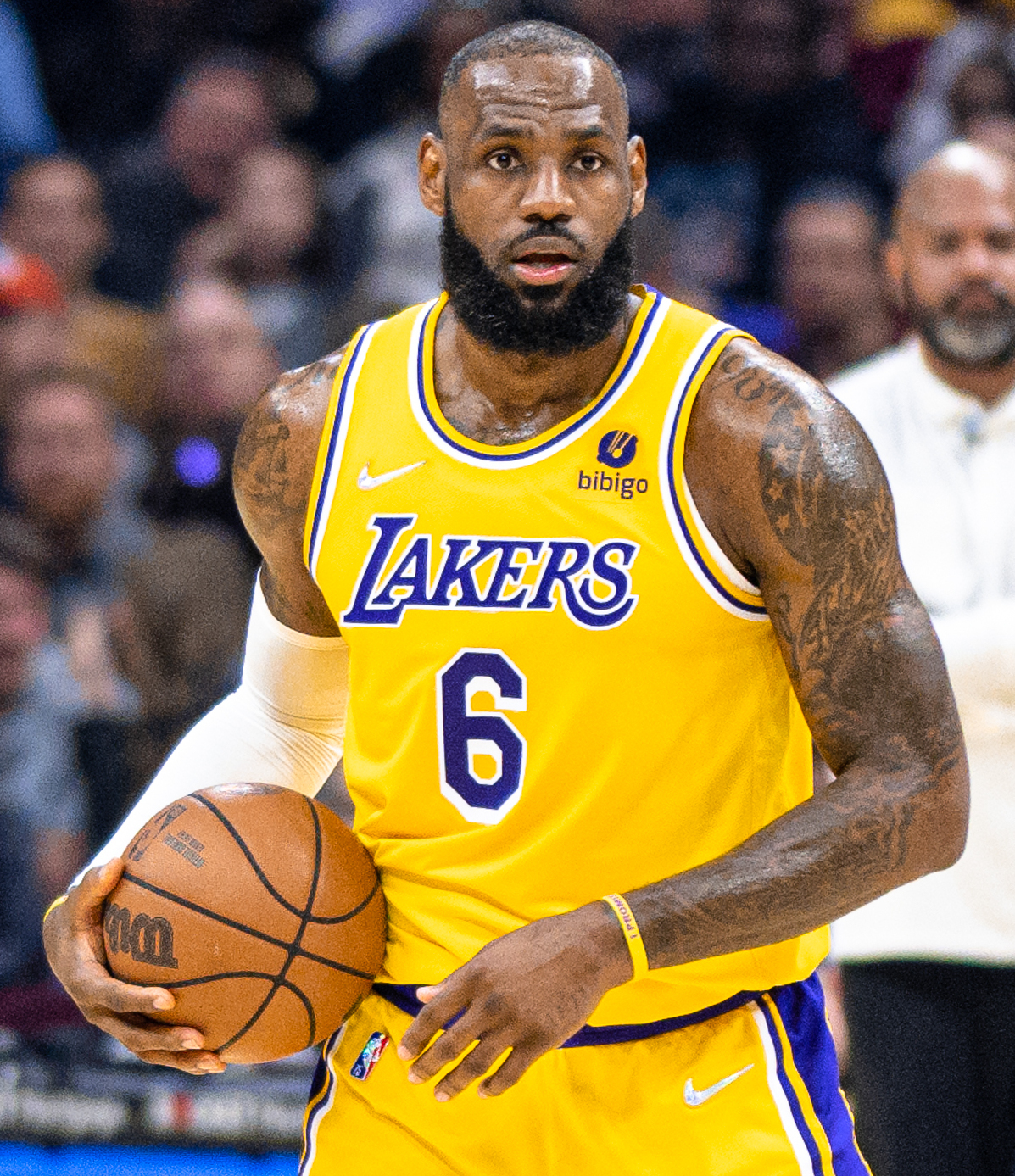
LeBron James did not blow up the Eastern Conference on Thursday. The explosions had already gone off. By the time he announced a two-year, $8 million deal with the Philadelphia 76ers, the team he chose, three of the East’s would-be contenders had already spent the summer weakening themselves without any help from him. He walked into the one building still holding a full hand and sat down.
Here is the part the wire coverage keeps skipping past: Boston, Cleveland and Golden State were each softened before LeBron ever put pen to paper, and he then chose to stack all of it onto a single roster. This is not the story of a superstar detonating a conference. It is the story of a 41-year-old reading the board better than anyone and picking the winner.
Philadelphia Was Already the East’s Best Hand
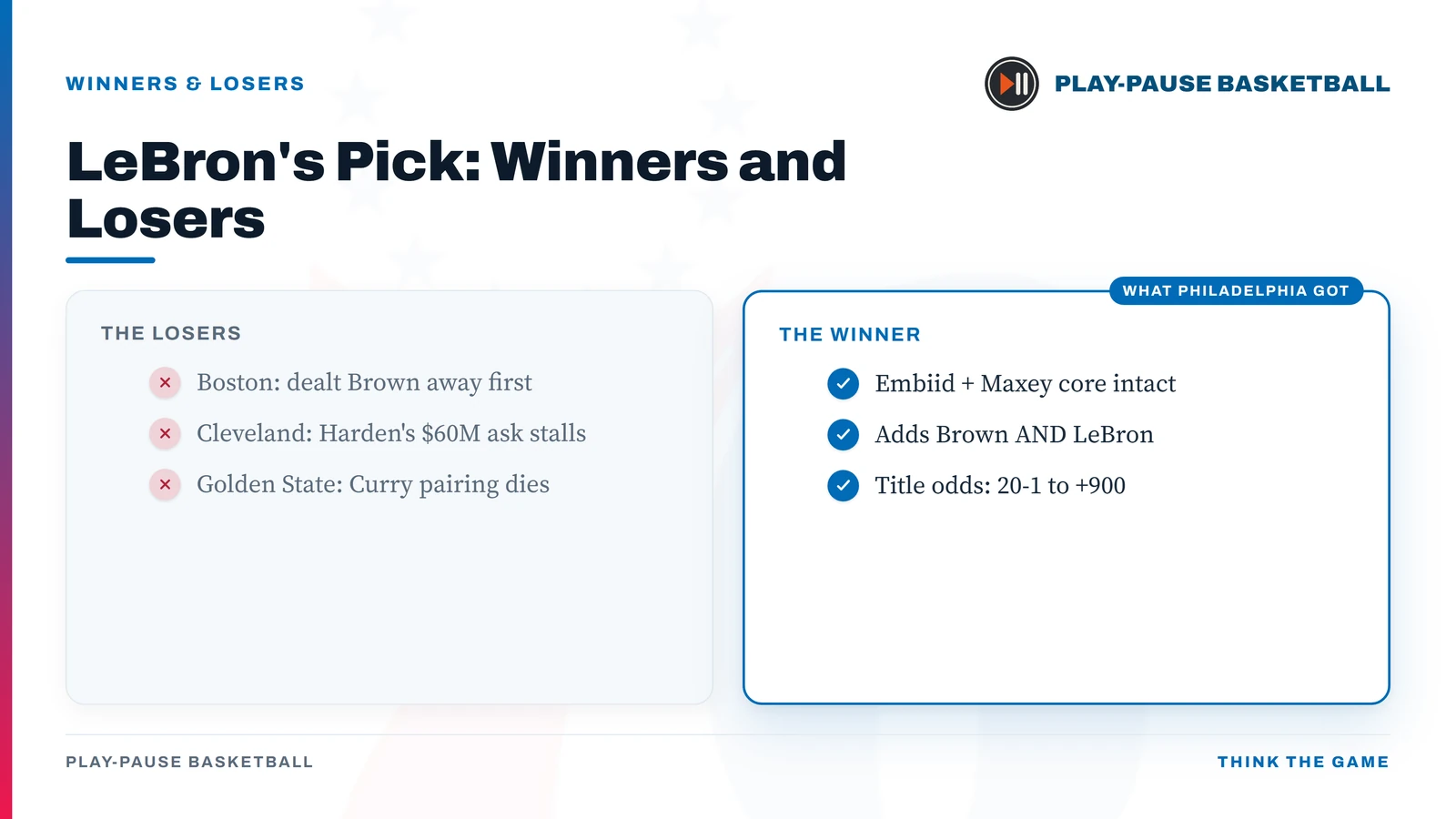
Strip the name off the deal and look at what Philadelphia had before it. Joel Embiid and Tyrese Maxey, a top-shelf inside-out pairing. And in the move that actually reshaped the conference, the Sixers had already traded for Jaylen Brown, sending Paul George to Boston earlier in the offseason. That was Philadelphia’s second big addition of the summer, per ESPN, and it was made against a Celtics team that has owned the East’s ceiling for years.
So the LeBron signing did not create a contender. It topped one off. A core of Embiid, Brown and Maxey was already the most dangerous top three in the conference on paper. Adding James, even a diminished one, turns a very good roster into the East’s clear favorite.
What a $4 Million Minimum Actually Buys
The number that will get quoted forever is the salary: roughly $4 million a year, the veteran’s minimum, with a player option in year two. LeBron told the Lakers in July he was leaving, and he backed it up by taking a discount most role players would not.
He framed it as a choice about the ending, not the money.
The market agreed. Philadelphia’s title odds moved from 20-1 to +900 on the news, per ESPN. Run the implied math and that is a jump from about 4.8 percent to 10 percent, more than doubling the Sixers’ shot for the price of a minimum contract. LeBron’s on-court role will shrink. His franchise-altering value did not.
Three Contenders, Three Different Wounds
The reason this signing lands so hard is that it did not fall on a healthy field. Each of the East’s other powers was already bleeding from a different cut, and Golden State was watching a fourth possibility close out West.
Boston: The Wound Was Self-Inflicted
Boston’s damage was done before LeBron was ever in play. Trading Brown for George was a cap-driven reset, a bet that the Tatum-led version could survive a downgrade on the wing. Now the player the Celtics gave up is not just gone. He is a teammate of the man who has spent a decade ending Boston’s springs. Brown made his feelings on the new fit plain.
Cleveland: The Fallback Plan Stalled
Cleveland’s summer is the quiet disaster. The Cavaliers did not just miss on a star. They now have to negotiate from weakness with their plan B. James Harden, the same one closing in on 30,000 career points, remains unsigned, and per SI’s Cavaliers beat his reported extension ask sits around two years and $60 million. That same report argues Cleveland is unlikely to go back over the first apron to keep him. This is what apron-driven roster decisions look like from the losing side: no cap room to chase the star who was available, and no easy way to pay the one already in the building.
Golden State: The Fantasy Never Landed
Out West, the Warriors were the romantic option, a chance to pair James with Stephen Curry for a farewell tour. Golden State’s front office had reportedly believed for weeks the fit was trending that way, per ESPN. It did not land. Golden State won only 37 games last season, Jimmy Butler is still rehabbing an ACL tear, and the pitch, per ESPN, was not enough. The Warriors are left with Curry’s milestone chase and not much else to sell a title-hungry veteran.
The 41-Year-Old Minimum Is Not a Star Anymore
Here is the honest objection, and it is a good one: a vet-minimum, 41-year-old LeBron is not a Big Three star on a spreadsheet. His final Lakers season was the quietest of his career. He averaged 20.9 points over just under 2,000 minutes, per ESPN, one of the lowest-scoring seasons he has ever played. The player who once bent a conference by himself now bends it by choosing a locker room.
The real move that reshaped the East was Boston trading Brown for George. LeBron just chose to land on the wreckage.
That is exactly the point, not a rebuttal to it. LeBron did not need to be the best player in the building. He needed to pick the right building, and he picked the one that had already gutted its closest rival. Whether he plays 25 minutes or 30, the Sixers now close games with Embiid, Brown, Maxey and a first-ballot Hall of Famer who has spent two decades making deep playoff runs look routine. That is a compounding move, not a creating one, and compounding is harder to answer.
The East Now Runs Through Philadelphia
Nothing here is locked. Embiid’s availability is the whole season, as it always is. Brown and Maxey have to share the ball with a ball-dominant legend on the downslope. Harden’s situation could still resolve in a way that keeps Cleveland dangerous. But the direction is set. The East spent its summer subtracting, and the one team that kept adding just landed the biggest name on the market for the smallest possible number. Watch how Nick Nurse staggers the minutes when camp opens. The math already favors Philadelphia. Now it has to hold up on the floor.