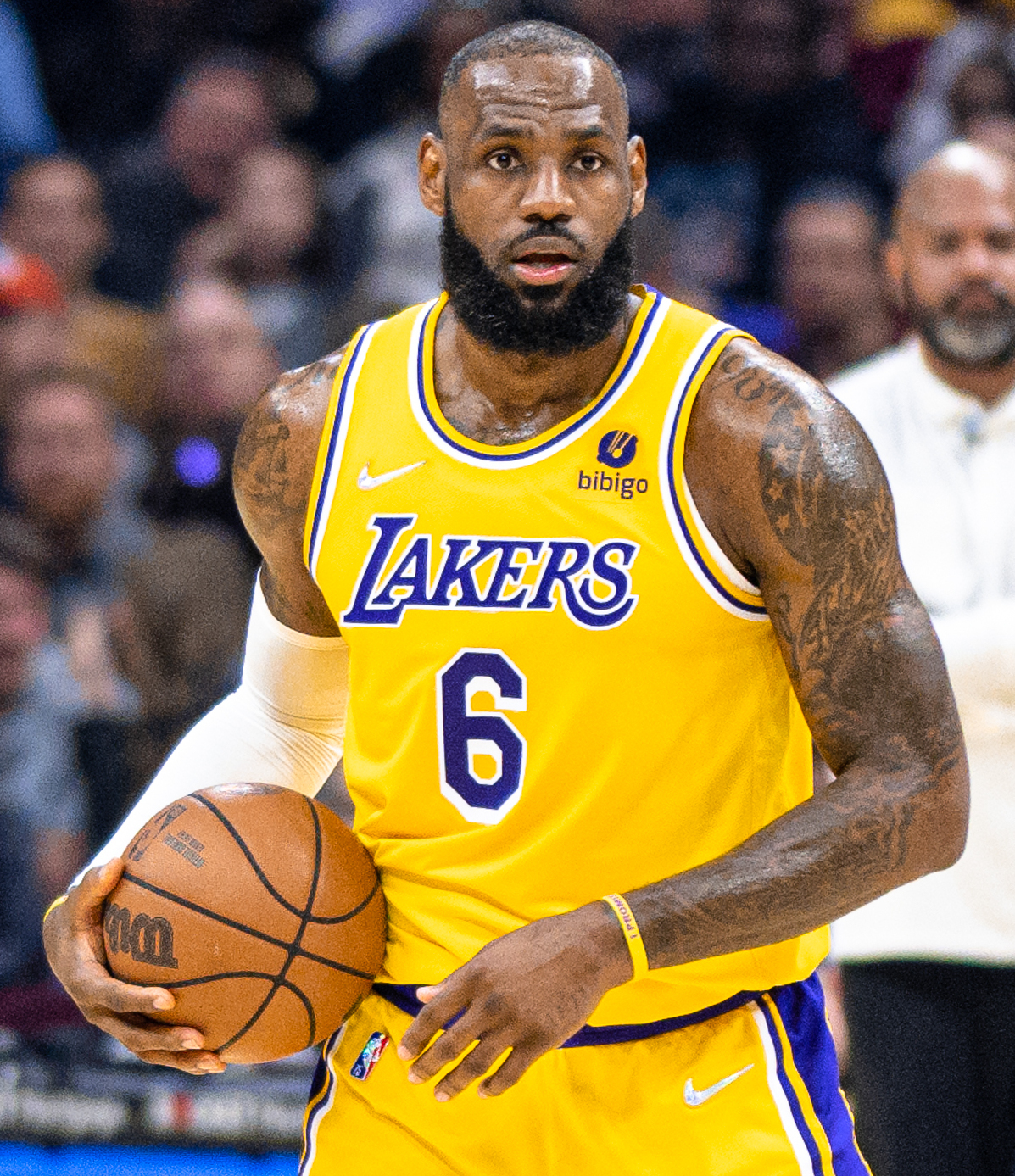

LeBron James is not going to be a Laker next season. That is now on the record: his camp has informed the team he will play his 24th NBA season, the one that starts after he turns 42 in December, somewhere else. Cue the sirens. Except nobody in Los Angeles is actually surprised, and if you have been watching the Lakers instead of listening to them, you shouldn’t be either. This divorce was filed the night the Lakers traded for Luka Doncic. July 2026 is just when the paperwork cleared.
The Lakers Chose Luka’s Timeline, and That Was the Right Call
Go back 18 months. When Los Angeles turned Anthony Davis into a 25-year-old Luka Doncic in the middle of a season, the franchise made the least sentimental decision in its recent history: it stopped building around LeBron’s clock and started building around Luka’s. Every move since has obeyed that logic. The roster got younger where it could, the future money bent toward Luka’s next contract, and LeBron went from being the sun the franchise orbited to being the most famous supporting act in basketball.
He was still good, which is the absurd part. At 41, James averaged 20.9 points, 7.2 assists and 6.1 rebounds across 60 games in 2025-26. There are maybe twenty players alive who would sign for that line tomorrow. But the Lakers do not need a 41-year-old top-20 player who commands the ball, the offense and the news cycle. They need runway for a 27-year-old who is already one of the three best players in the world. Both things can be true, and both sides have clearly known it for a while. This is not a falling out. It is a handoff that finally reached the last page.
For the First Time, LeBron Has No Leverage. Read That Again.
Here is what makes this free agency genuinely new, and it has nothing to do with which hat he picks up. Every previous LeBron decision was an exercise in market power. In 2010 he took a six-year max worth about $110 million and froze half the league for weeks while franchises cleared cap space on spec. In 2014 a first-person essay moved the entire Eastern Conference. In 2018 the Lakers reorganized their decade around his signature.
In 2026, LeBron James is reportedly willing to play for the veteran minimum. Rich Paul told ESPN he has spoken to 27 teams, nearly the whole league. There is no max demand, no cap-space hostage situation, no infrastructure of leverage at all. The most powerful free agent in the history of the sport is entering the market with the contract profile of a ring-chasing role player, on purpose.
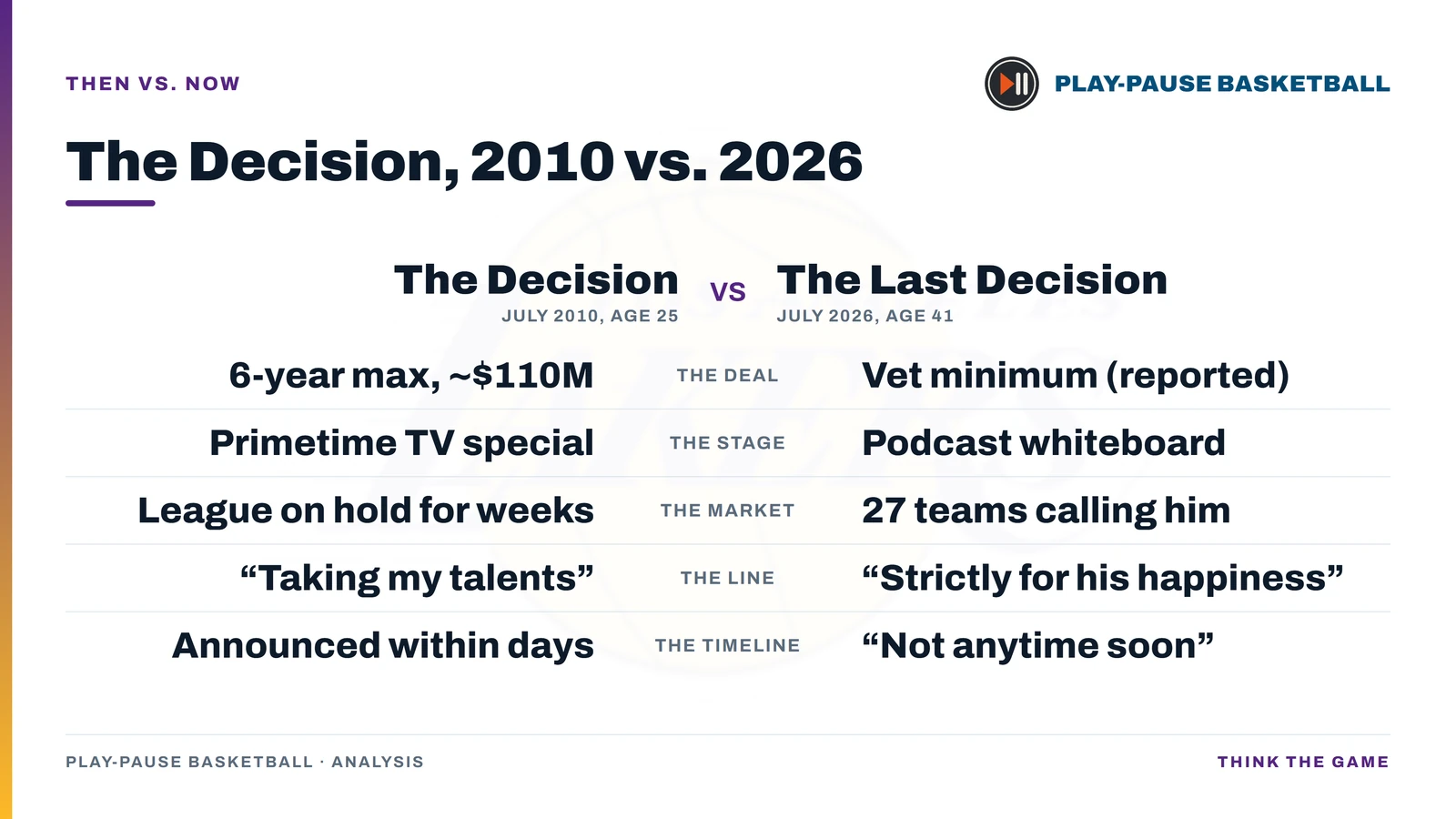
Paul said it plainly: this is the first time LeBron is making a decision pressure-free. He has won already. He made good on his promise in L.A. This one, in his agent’s words, is strictly for his happiness. Strip the PR gloss off that sentence and it still holds up, because the money confirms it. A man selling leverage does not advertise a minimum salary. A man choosing a farewell stage does.
The Whiteboard Is the New TV Special, and That’s the Point
The 2010 announcement was a primetime television special that scarred a fanbase for a decade. The 2026 version, so far, is Rich Paul on a podcast with Max Kellerman, walking through roughly ten options on a whiteboard and telling everyone not to expect an answer anytime soon. No countdown, no venue, no urgency. The format is the message. LeBron spent twenty years being the market. Now he is browsing it.
That patience is also strategy, just aimed at a different target. When you cost the minimum, every contender’s math works, so the deciding variables stop being financial and start being human: role, city, family, story. Which teams let their July plans breathe while a 41-year-old thinks? All of them, apparently. That is the last form of power he has left, and he is using every ounce of it. The leverage era is over. The audience era is not.
Cleveland Isn’t a Rumor. It’s a Gravity Well.
The reported list of finalists runs six deep: Cleveland, Miami, Denver, Golden State, Philadelphia, Minnesota. Treat five of those as guest rooms. The Cavaliers are the one that reads like a plan. Donovan Mitchell just locked in a max extension, so the roster’s present is secured. James Harden declining his $42.3 million option pulled Cleveland out of the second apron, exactly the kind of breathing room a minimum-salary legend slots into. Evan Mobley gives Cleveland the two-way frontcourt anchor LeBron has never stopped praising. And Brandon Weems, one of LeBron’s oldest friends from Akron, sits in the Cavs’ front office.
Then there is the part that has nothing to do with basketball. LeBron spent the July 4 holiday stretch in Akron, 40 miles from Cleveland, posing with his high school teammates. Rival teams are reportedly already resigned to where this lands. None of that is a signature, and Paul insists nothing is close. But if you are drawing the story arc, a 42-year-old finishing where he started, on a contender he does not have to carry, is not a rumor. It is narrative gravity, and LeBron has never once resisted narrative gravity.
Los Angeles Gets the Cleanest Breakup in Superstar History
Spare a thought for how rare this ending is. Superstar exits from Los Angeles usually come with trade demands, burner accounts or a front office in flames. This one comes with a championship banner already hanging, a successor already in the building and a legend leaving on a handshake. The Lakers got a title, eight seasons and the Luka bridge out of the LeBron era. LeBron gets to write his last chapter anywhere he wants, at a price every team can pay.
The bombshell headline says LeBron is leaving the Lakers. The honest headline says both sides finished the assignment. What happens next is the first LeBron decision in sixteen years that will not reorganize the league’s finances, and somehow it might be the most watched one yet. He is no longer selling his talents. He is selling the ending, and everyone, including Cleveland, including you, is already buying.