
Forget Who Won. The Box Score Buried the Story
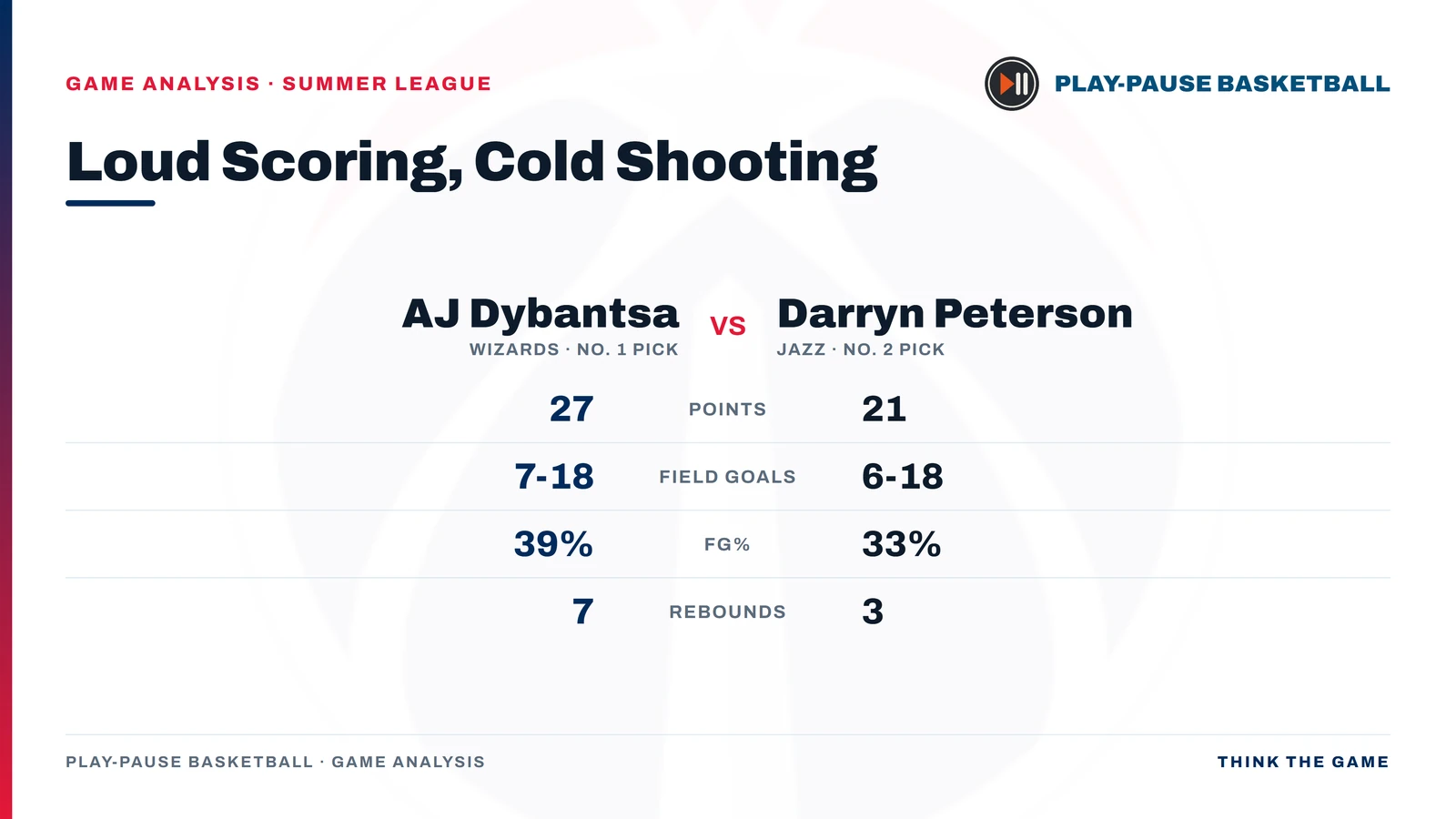
The scoreboard said AJ Dybantsa 27, Darryn Peterson 21, Wizards 92, Jazz 88. Everyone will file that under “No. 1 pick wins round one” and move on. That is the least useful sentence you could write about Thursday night in Las Vegas.
The two most scrutinized rookies of the 2026 draft finally shared a floor, and the interesting part was never who scored more. It was that each one put his single defining flaw on tape in one loud, uneven debut, and each flaw happens to be the exact thing his rebuilding team spent the offseason betting he would fix.
Washington and Utah Didn’t Draft Scorers. They Drafted Answers
Neither of these teams needed points. They needed a specific player to become a specific thing.
Washington took Dybantsa first because he is the wing the franchise wants at the center of everything. Then it committed the backcourt around him: Trae Young declined a $49 million option to sign a four-year, $212 million deal, per ESPN’s free-agency reporting. That contract matters here. The ball-dominant, shot-hunting role in Washington is already spoken for and paid for. Dybantsa’s rookie-year value is not “can he get a bucket.” It is whether he can score efficiently inside someone else’s offense.
Utah’s bet is the opposite shape. Peterson was the No. 2 pick as a lead guard, the guy who is supposed to organize a young roster and make the game easier for everyone around him. Utah does not need him to drop 30. It needs him to run a team.
The Numbers That Matter Aren’t the Points
Both rookies cleared 20. Both also took eighteen shots and missed at least eleven of them. That is where the reading actually starts.
Dybantsa’s 27 Came on a Shot Diet That Won’t Travel
Dybantsa went 7-of-18, and the shape of those attempts told you more than the total. He lived in the midrange, hunting contested pull-ups against a set defense, the kind of shot that inflates a Summer League scoreline and quietly sinks an NBA offense. The flashes were real: downhill pressure, free throws, a couple of genuine playmaking reads. The habit was also real, and it is the habit, not the scoring, that Washington drafted a problem around.
Peterson Turned It Over Eight Times Trying to Create
Peterson’s line was messier in the way that actually matters for his job. He scored 21 on 6-of-18, but he coughed the ball up eight times, a game high, and most of it came against traps and half-court pressure. His scoring gift is not in doubt. His ability to keep an offense organized when the defense loads up at him is the entire question, and Thursday he failed it repeatedly.
Per ESPN's debut takeaways, Peterson repeatedly lost the handle against traps, while Dybantsa leaned on a heavy diet of contested midrange jumpers.
Yes, It’s Summer League. Here’s Why This One Counts
The fair objection writes itself. It is one game, against a floor of two-way players and G-League hopefuls, and rookie stat lines in July are close to meaningless. Eight turnovers in Las Vegas will not follow Peterson to opening night.
Granted, on the totals. The raw numbers are noise. What is not noise is the shape of the flaw, because the shape is what travels. A polished scorer settling for contested twos and a creator losing the handle under pressure are not random July events. They are the precise pre-draft questions scouts already had, showing up on the first available night. For Washington that is not cosmetic: with Young’s role locked in at $53 million a year, Dybantsa’s path to helping a winning team runs through catch-and-shoot and rim pressure, not the contested midrange looks he leaned on Thursday.
What Washington and Utah Need to See in Game 2
Here is what to actually watch, and it has nothing to do with who wins.
For Dybantsa, track the shot chart, not the point total. Fewer contested long twos, more rim attempts, free throws, and clean catch-and-shoot threes. Twenty points on better shots is a real step. Twenty-seven on eighteen chucks is not.
For Peterson, watch one ratio: assists to turnovers. The scoring will come. Whether he can run a team when the defense makes it hard is the only thing that decides how good the Jazz get. The duel storyline will chase both of them all summer. Tune out the head-to-head. The two numbers that forecast the careers are hiding underneath it.